"Who's in Charge Here?" (Numbers)

A recurrent theme in Numbers is this question: “Who’s in charge here?”
It begins on a high note. The tabernacle and its furnishings are completed as per God’s instructions. Aaron and the priests are consecrated accordingly.
The glory of God, before seen only on the mountain amid thunder and lightning, comes to rest in the tabernacle. They observe their second Passover with the memory of their deliverance from Pharaoh still fresh in their minds.
The motley crew who straggled out of Egypt a year earlier is now a mighty army, marching together under the standard of God’s glory. The Ark of the Covenant, symbol of God’s presence, leads the way.
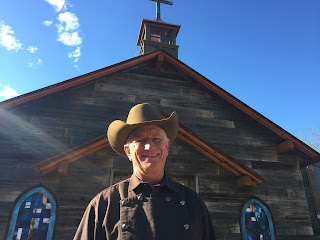
It is an impressive sight. They are assembled in camps by tribe, three abreast, surrounding the portable tent of meeting. This always makes me think of the "canvas cathedral" where we worshiped for several years, as you old-timers will recall, and pictured above.
“The Lord bless you and keep you,” Aaron says, a beautiful benediction repeated in Jewish and Christian worship still today. “The Lord make his face to shine upon you and be gracious to you; the Lord lift up his countenance upon you and give you peace" (Numbers 6:24ff). Life was good.
The good times lasted three days. Before a week passed, they returned to their incessant grumbling. They longed for the delectable delights of Egyptian seafood. They preferred slavery to freedom (Numbers 11).
It only gets worse. Soon, we encounter a steady stream of complaints – mostly about who is in charge. Miriam and Aaron question their brother Moses’ leadership (12). Ten of the twelve men who reconnoiter Canaan question the wisdom of claiming their inheritance (13). The people, predictably, “grumbled against Moses and Aaron.” “Let us choose another leader,” they said (14:2-4).
Of course, the real issue is not Moses at all; it is the Lord himself. “How long will this people despise me? And how long will they not believe in me, in spite of all the signs that I have done among them?” the Lord says (14:11).
The people who refused to enter the Promised Land are granted their wish: they will never enter it. They are reduced to a lifetime of wilderness wandering.
We would like to think that, sufficiently chastened, they finally learned their lesson. But of course they did not. Almost immediately we read of a rebellion by Korah of the Levites, and some leaders from the tribe of Reuben (16).
The Levites are not content to serve in the ministry of the tabernacle: They want the privileges of Aaron’s priesthood. The Reubenites, who were the descendants of Jacob’s first-born son, and thus typically the “leader tribe,” ask Moses, “Who made you prince?” The Levites want Aaron’s job, and the Reubenites covet Moses’. One group wants to be head priest, and the other wants to be head prince.
Both rebellions are squelched, of course. Moses and Aaron are vindicated, as is the priesthood, reminding us that one of the ways we show our devotion to God is by honoring those he has placed over us – whether political or priestly.
Soon we will read the incredible story of Balaam and his ass (Numbers 22-24). I know it’s junior high humor to print it that way, but I can’t help it! After all, this is, alas, another asinine story asking the same question, “Who’s in charge here?”
For example, consider: Balak the king thinks he is in charge of Balaam the seer, but clearly he is not. Paid handsomely to curse Israel, Balaam blesses them instead.
The Levites are not content to serve in the ministry of the tabernacle: They want the privileges of Aaron’s priesthood. The Reubenites, who were the descendants of Jacob’s first-born son, and thus typically the “leader tribe,” ask Moses, “Who made you prince?” The Levites want Aaron’s job, and the Reubenites covet Moses’. One group wants to be head priest, and the other wants to be head prince.
Both rebellions are squelched, of course. Moses and Aaron are vindicated, as is the priesthood, reminding us that one of the ways we show our devotion to God is by honoring those he has placed over us – whether political or priestly.
Soon we will read the incredible story of Balaam and his ass (Numbers 22-24). I know it’s junior high humor to print it that way, but I can’t help it! After all, this is, alas, another asinine story asking the same question, “Who’s in charge here?”
For example, consider: Balak the king thinks he is in charge of Balaam the seer, but clearly he is not. Paid handsomely to curse Israel, Balaam blesses them instead.
Balaam thinks he is in charge of his own prophetic words, but again, he is not. And, with delightful irony, Balaam thinks he is in charge of his, umm, donkey, but of course he isn’t. He is the seer who cannot even see what is right in front of his face.
Which pretty much describes the whole human race, don’t you think? We all want to be in charge, or we think we ought to be. No, we don’t come right out and say it. We just act like it. We think we know what is best, when in fact we don’t. We think we can predict the future, when in fact we cannot. We think we can see, when in fact we are blind.
Perhaps one of the purposes of the wilderness mayhem in Numbers is to portray for us the utter futility of pretending we are — or ought to be — in charge. We are as blind as Balaam, as stiff-necked as the people of Israel. But thanks be to God. He did not give up on them, and he does not give up on us.
Proof? Many years after these events, a respected religious leader came to interview a young Jewish rabbi. Their names were Nicodemus and Jesus, and their story is found in John 3. Jesus’ answer to Nicodemus’ spiritual question was direct and to the point: “You must be born again." This idea was as difficult for Nicodemus to swallow as it is for many today. “How can these things be?” he said.
Jesus tried another image: “The wind blows where it wishes and you hear its sound, but you do not know where it comes from or where it goes.” He, like you perhaps, wonders where Jesus is going with this, though of course we see that both wind and childbirth are experiences over which we have no control. In each case, we are definitely not in charge.
Finally, Jesus used an image directly out of Nicodemus’ Bible: “As Moses lifted up the serpent in the wilderness, so must the Son of Man be lifted up, that whoever believes in him may have eternal life" (John 3:15).
When we read the book of Numbers (chapter 21), we see immediately what Jesus was saying to Nicodemus. In another episode of “Who’s in Charge Here?”, judgment came upon the people of Israel. At God’s instruction, Moses raised a bronze serpent on a pole. Those who looked in faith upon the serpent were saved from destruction.
Jesus' meaning is clear: Just like that serpent in the wilderness, he will be lifted up. His death on a cross, foretold in that moment, will become the means by which all guilty, lawless, and poisoned people will be given new life.
Which pretty much describes the whole human race, don’t you think? We all want to be in charge, or we think we ought to be. No, we don’t come right out and say it. We just act like it. We think we know what is best, when in fact we don’t. We think we can predict the future, when in fact we cannot. We think we can see, when in fact we are blind.
Perhaps one of the purposes of the wilderness mayhem in Numbers is to portray for us the utter futility of pretending we are — or ought to be — in charge. We are as blind as Balaam, as stiff-necked as the people of Israel. But thanks be to God. He did not give up on them, and he does not give up on us.
Proof? Many years after these events, a respected religious leader came to interview a young Jewish rabbi. Their names were Nicodemus and Jesus, and their story is found in John 3. Jesus’ answer to Nicodemus’ spiritual question was direct and to the point: “You must be born again." This idea was as difficult for Nicodemus to swallow as it is for many today. “How can these things be?” he said.
Jesus tried another image: “The wind blows where it wishes and you hear its sound, but you do not know where it comes from or where it goes.” He, like you perhaps, wonders where Jesus is going with this, though of course we see that both wind and childbirth are experiences over which we have no control. In each case, we are definitely not in charge.
Finally, Jesus used an image directly out of Nicodemus’ Bible: “As Moses lifted up the serpent in the wilderness, so must the Son of Man be lifted up, that whoever believes in him may have eternal life" (John 3:15).
When we read the book of Numbers (chapter 21), we see immediately what Jesus was saying to Nicodemus. In another episode of “Who’s in Charge Here?”, judgment came upon the people of Israel. At God’s instruction, Moses raised a bronze serpent on a pole. Those who looked in faith upon the serpent were saved from destruction.
Jesus' meaning is clear: Just like that serpent in the wilderness, he will be lifted up. His death on a cross, foretold in that moment, will become the means by which all guilty, lawless, and poisoned people will be given new life.
Unlike wayward humanity, who is always grumbling and questioning God, Jesus will surrender to the Father’s will — even at the cost of his own life. He is the ultimate faithful Israelite, for whom the answer to the question, “Who’s in charge here?” is simply this: “Not my will, but thine be done.”
And for those who, in faith, look to that cross, new life will come into their dead bones. It will be like a wind, a second wind. It will be like a birth, a second birth. It will be like a life, an eternal life.
And for those who, in faith, look to that cross, new life will come into their dead bones. It will be like a wind, a second wind. It will be like a birth, a second birth. It will be like a life, an eternal life.